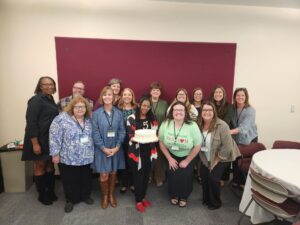
 On Friday, October 24th sixty-eight regional partners assembled together for a Regional Summit, titled “From Awareness to Action in Trauma-Informed Care” at Dalton State College. The overall intent of this event was to nudge people, regardless of their starting point, down the road in their journey with deeper understanding of what it means to be trauma-informed that would lead to application and action.
This event was coordinated by Georgia Family Connection Coordinators from the Northwest Region as a part of their Building a Region of Resilience Coalition of NWGA funded by Resilient Georgia. Building a Region of Resilience strategically emphasizes building community awareness around trauma and poverty, building capacity of professionals and caregivers, and promoting systemic change within communities.
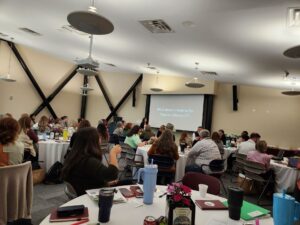
The event began with a welcome and an overview of the Building a Region of Resilience’s history and achievements over the past five years. Following this, participants enjoyed a keynote presentation by Katie Rinaudo, a Training and Consultation Specialist from the Karyn Purvis Institute of Child Development at Texas Christian University. Rinaudo provided insights into the pillars of trauma-informed care: felt safety, connection, and self-regulation, illustrating how these pillars can be applied across various sectors. Attendees were encouraged to reflect on their organization’s roles, rules, and tools, assessing whether any practices contradicted the three pillars.
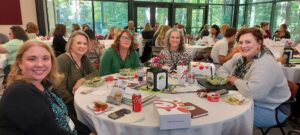
After a networking lunch, participants could personalize their learning experience by selecting two breakout sessions. Breakouts included learning on What Trauma Informed Is or Isn’t, Attachment Theory, Empowering your Nervous System, Mindful Awareness, Compassion Fatigue, Co-Regulation Techniques and Trauma-informed resources in the state or within sectors. Breakout sessions featured speakers from Resilient Georgia and Trust-Based Relational Intervention Practitioners from the TBRI Georgia Collaborative.
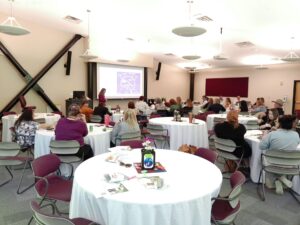
Overall, participant feedback indicated that it was a fantastic day dedicated to networking, learning, and deepening their understanding of trauma-informed practices and practical tools. As a result of the summit, several counties have expressed interest in additional training for their staff or in sharing this information with other community partners. A participant from Whitfield County shared, “The content was directly applicable to my work, and I intend to enhance my skills as a coordinator with an emphasis on being Trauma-Informed.” If the goal was to create an impact, it appears we have achieved that! As a region, we look forward to hearing about the ripple effects of this event.