About Us
Dalton/Whitfield Family Connection, as part of the Georgia Family Connection statewide network, promotes a family-based, community partnership environment that strategically plans around and advocates for children and family needs and challenges in Whitfield County.
We’ve developed relationships with numerous agencies and organizations over the past three decades to research the needs of children and families in our community, and to work together to address those needs. In our county, Family Connection is fortunate to be housed in the Dalton Public Schools school system, where we can work closely with students and families. The Dalton Public Schools Board of Education serves as our fiscal agent.
Our Collaborative strives to partner with local agencies and school systems to promote programs that improve school success. We pursue that goal by determining areas of need using local data, building on community and family strengths, pooling resources, working with diverse community members, and committing to a long-term process of planning, implementation, and evaluation.
Dalton/Whitfield Family Connection is governed by a local board, coordinator, and community partners that together bring to the table decades of experience in working with children and families in Whitfield County, including our most vulnerable and underserved populations. The leadership team covers the fields of prevention, education, public service, and faith-based organizations.

Our Collaborative partners consist of community and regional stakeholders from:
- faith-based organizations,
- local government,
- various health care sectors,
- nonprofits,
- boards of education,
- businesses,
- colleges and universities, and
- early care and learning.
Dalton/Whitfield Family Connection—recognizing that collaboration and collective effort yield collective impact—is committed to improving outcomes for our children and families by identifying and bridging gaps in community resources and services, creating system changes, and eliminating barriers.
Check out our Strategy Diagram to learn how we’re working to improve school success from birth through grade 12.
About Georgia Family Connection
Georgia Family Connection, a statewide infrastructure for aligning efforts across sectors, comes together through two distinct but connected change-makers: a statewide network of Collaboratives in all 159 counties and Georgia Family Connection Partnership (GaFCP). Each strengthens the other—and together, they form Georgia Family Connection.
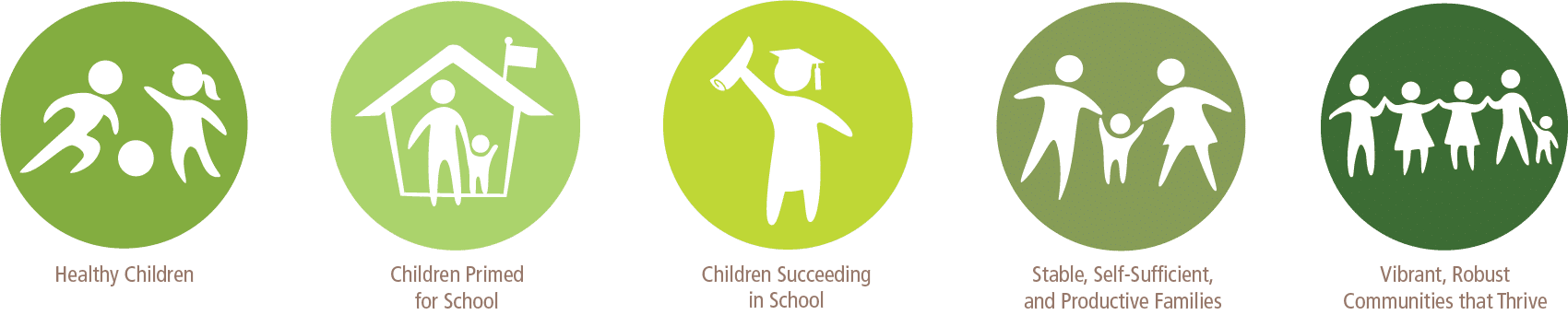
We work toward measurably better outcomes across five key result areas:
The Georgia Family Connection statewide network—the only one of its kind in the country—works alongside children, families, and communities to help them thrive by crafting local solutions that maximize resources and make systems more effective and efficient. This network cultivates collaboration among community service providers, reducing duplication of efforts and allowing everyone to do more with the resources available.
Collaboratives equip local service agencies and organizations with the tools and methods they need to be more effective, helping them develop and work together on integrated strategies to improve child, family, and community well-being. We fill in service gaps in our communities by functioning as an incubator for direct services to families and children when a need isn’t being met. We also respond to urgent situations by maintaining strong relationships and the infrastructure necessary to deliver timely support.
GaFCP unites the statewide network in a shared framework that promotes consistent, ongoing collaboration and peer learning—equipping Collaboratives to draw on communities’ collective wisdom and experience across the state. GaFCP develops effective partnerships with state leaders, private enterprises, and other stakeholders to link the network with public and private funding, resources, talent, and innovation. GaFCP also empowers leaders across Georgia by making data accessible and providing practical tools, training, and technical assistance to support informed decision-making.